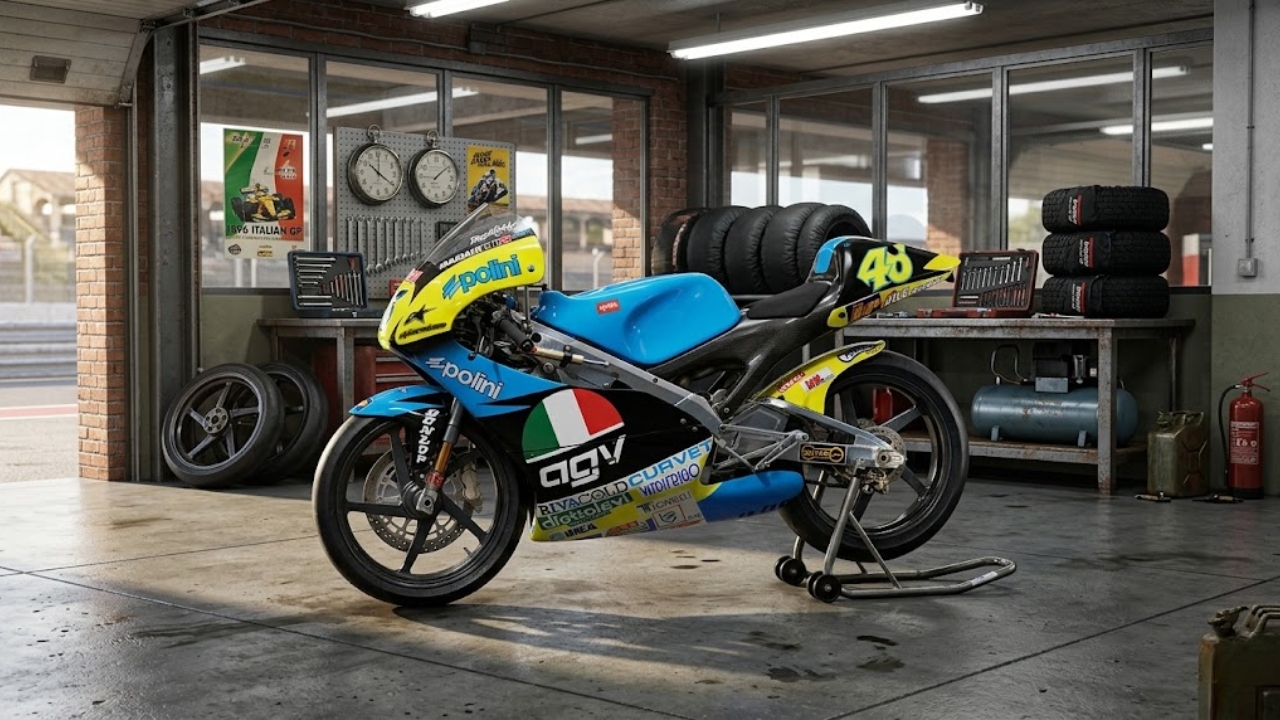
The world of motorcycle racing has always been built on speed, risk, innovation, and the relentless pursuit of perfection. Every generation witnesses machines that redefine what is possible on two wheels, but occasionally a motorcycle arrives that represents something even greater than engineering excellence. It becomes a symbol of ambition, legacy, and the fulfillment of a lifelong dream.
That is exactly what happened when the first Grand Prix bike associated with one of the world’s greatest moto racers was finally revealed to the public. Fans, engineers, former champions, and racing insiders immediately recognized the significance of the moment. This was not simply another racing motorcycle unveiled under bright lights and media cameras. It was the realization of years of experience gathered from the highest levels of international motorsport.
The bike represents the philosophy of a rider who spent decades understanding every corner, every braking point, every acceleration zone, and every subtle detail that separates victory from defeat. For racing fans, the unveiling was emotional because it blended history with the future of Grand Prix competition.
The Vision Behind the Dream
Great racers are rarely satisfied with simply riding motorcycles designed by others. Over time, elite champions develop their own understanding of how a racing machine should behave. They know how a bike should respond entering a corner, how the chassis should communicate with the rider, and how power delivery affects confidence at high speed.
This dream Grand Prix bike was reportedly built around that exact philosophy. Instead of prioritizing raw horsepower alone, the creators focused on balance, precision, and rider connection. The goal was to create a machine that felt intuitive at racing speeds while still delivering elite-level performance.
The legendary racer behind the project had long spoken about wanting to create a motorcycle that reflected everything learned throughout a career filled with championships, crashes, rivalries, and unforgettable victories. Engineers worked closely with the racing icon to transform those ideas into reality.
The result is a machine designed not only to compete but also to inspire future generations of riders.
A Design That Reflects Racing Heritage
The visual appearance of the Grand Prix bike immediately captured attention. Every line of the machine appears purposeful. The aerodynamic bodywork flows naturally from front to rear, creating an aggressive yet elegant racing profile.
Unlike many modern motorcycles that rely heavily on oversized winglets and complex styling, this bike embraces a cleaner racing identity. The fairings are sculpted for efficiency while maintaining a timeless Grand Prix aesthetic. Fans of classic racing motorcycles appreciated how the design respected tradition without ignoring modern innovation.
The livery also carries emotional value. Racing colors, sponsor placement, and subtle design cues pay tribute to historic championship-winning machines from previous eras. For longtime followers of motorcycle racing, the bike feels like a bridge connecting the golden age of Grand Prix competition with the advanced technology of today.
Even the smallest details were carefully considered. The riding position, tank shape, and cockpit layout were reportedly developed through extensive rider feedback to maximize comfort and control during high-speed racing situations.
Engineering Excellence at the Core
Underneath the stunning exterior lies a machine packed with cutting-edge engineering. The motorcycle’s engine was developed to deliver explosive acceleration while maintaining smooth and predictable throttle response. Engineers understood that riders need confidence just as much as speed.
The chassis was another major area of focus. Modern Grand Prix racing demands extreme cornering stability combined with rapid direction changes. To achieve this balance, designers used lightweight materials and advanced structural concepts aimed at reducing flex while preserving rider feel.
Suspension development reportedly took years of testing across multiple circuits. The goal was not merely lap-time performance but consistency over race distance. Tire management has become one of the most critical aspects of modern racing, and the bike was engineered to maintain grip and stability under changing conditions.
Electronics also play a vital role in today’s Moto racing environment. Sophisticated traction control, launch systems, braking management, and engine mapping help riders push closer to the limit than ever before. However, insiders involved with the project emphasized that technology was used to support rider skill rather than replace it.
That philosophy perfectly reflects the mentality of old-school champions who believe the rider should always remain the heart of the machine.
Why Fans Are So Emotionally Invested
Motorcycle racing creates a unique emotional connection between fans and riders. Unlike many forms of motorsport, motorcycle racing exposes athletes to enormous physical danger. Fans witness racers leaning inches from the asphalt at impossible speeds, fully aware that one mistake can change everything.
Because of that reality, legendary riders become more than athletes. They become symbols of courage, determination, and resilience.
The unveiling of this first Grand Prix bike represents something deeply personal for supporters who followed the racer’s career through triumph and heartbreak. Many fans grew up watching championship battles, dramatic overtakes, and unforgettable rivalries involving this icon of the sport.
Seeing the racer finally present a motorcycle built from personal vision and racing knowledge feels like the completion of a long journey. Social media exploded with reactions from fans sharing memories, photos, and emotional tributes connected to the racer’s career.
For younger audiences, the bike offers a chance to connect with the heritage of motorcycle racing while looking toward its future.
The Influence on Future Racing Technology
Grand Prix motorcycles often influence the future of performance motorcycles available to the public. Technologies first tested on racetracks eventually appear in road-going superbikes and high-performance sport motorcycles.
Industry experts believe this newly revealed machine could shape future engineering trends in several important ways. Its aerodynamic efficiency, lightweight construction methods, and rider-centered design philosophy may inspire future manufacturers to rethink how performance motorcycles are developed.
One particularly interesting aspect is the bike’s emphasis on rider feel and communication. In recent years, some critics argued that racing motorcycles were becoming too dependent on electronics and data systems. This project appears to restore focus on the emotional and physical connection between rider and machine.
That balance between advanced technology and authentic riding experience may influence how future motorcycles are designed for both racing and everyday enthusiasts.
Reactions From the Racing World
The racing community responded to the unveiling with excitement and admiration. Former champions praised the ambition behind the project, while current riders expressed curiosity about how the motorcycle would perform on track.
Engineers from rival teams reportedly studied every available image and technical detail immediately after the reveal. In elite motorsport, innovation is never ignored. Even small breakthroughs in aerodynamics, chassis balance, or power management can create major competitive advantages.
Veteran commentators also highlighted the emotional significance of the project. Many noted that very few riders possess the credibility, experience, and respect necessary to launch a motorcycle that immediately captures worldwide attention.
The unveiling event itself carried the atmosphere of a historic occasion rather than a standard product launch. Fans gathered in huge numbers, eager to witness the first public appearance of a machine they had heard rumors about for years.
More Than a Motorcycle
What makes this Grand Prix bike special is not just its technical capability. Plenty of motorcycles are fast. Plenty of racing projects are ambitious. What separates this machine from others is the story behind it.
It represents decades of sacrifice, discipline, and obsession with perfection. It reflects the experiences of a rider who dedicated life and body to mastering one of the most dangerous sports in the world.
For aspiring racers, the motorcycle symbolizes possibility. For longtime fans, it is a celebration of racing history. For the motorsport industry, it serves as proof that passion still drives innovation at the highest level.
The reveal of this first Grand Prix bike was more than a media event. It was a reminder of why people fall in love with motorcycle racing in the first place. Speed matters. Technology matters. Championships matter. But the heart of racing has always been dreams.
And sometimes, the greatest dreams finally become reality on two wheels.
