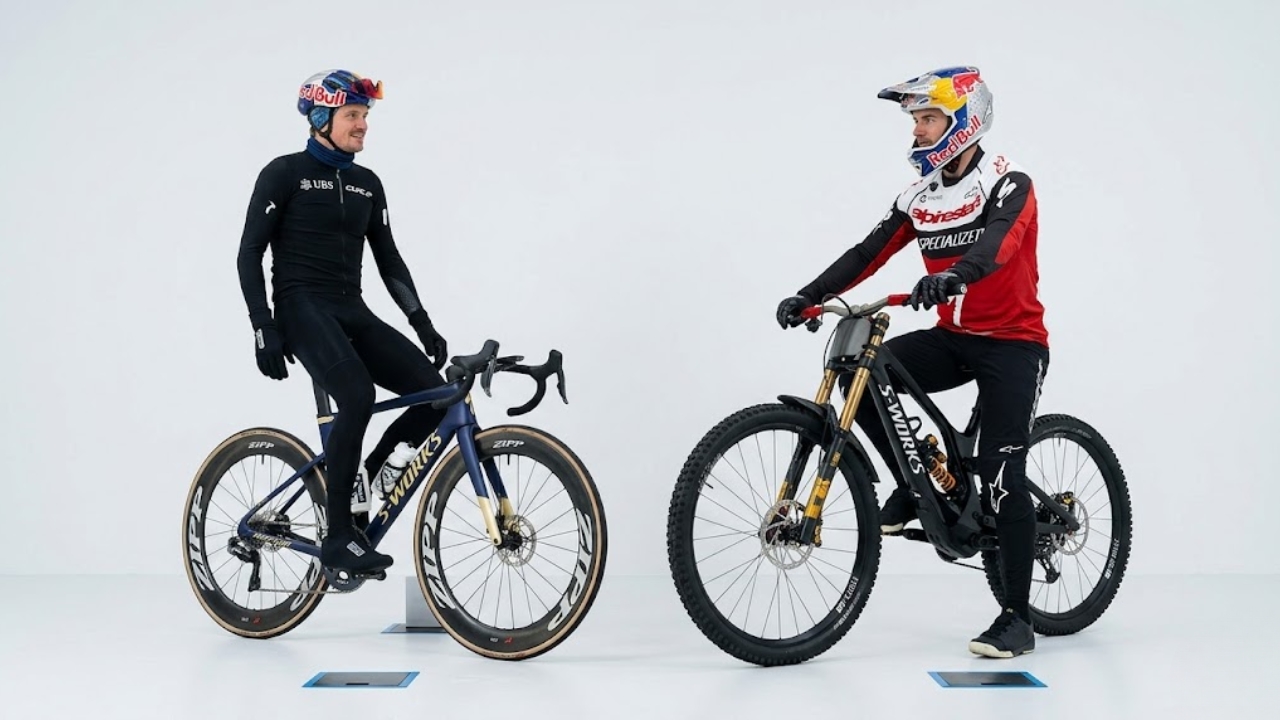
Cycling has evolved into a diverse and dynamic sport, with multiple disciplines offering unique challenges and thrills. Among the most popular are mountain biking (MTB) and road cycling, each requiring specialized skills, equipment, and physical conditioning. When two elite athletes from these disciplines come together for a head-to-head challenge, it becomes more than just a race—it becomes a fascinating comparison of endurance, technique, and adaptability. The matchup between downhill mountain biking legend Loic Bruni and versatile road and cyclocross star Tom Pidcock captures this contrast perfectly, showcasing how different cycling worlds collide in an intense and entertaining competition.
The Athletes: Specialists in Their Craft
Loic Bruni is widely regarded as one of the greatest downhill mountain bikers of his generation. Known for his explosive speed, technical precision, and fearless riding style, Bruni has dominated some of the toughest downhill courses in the world. His expertise lies in navigating steep descents, rocky terrains, and unpredictable trails at breathtaking speeds, where even the smallest mistake can be costly.
Tom Pidcock, on the other hand, is a multi-discipline cycling phenomenon. Equally comfortable on the road, gravel, and cyclocross circuits, Pidcock brings a unique blend of endurance, tactical intelligence, and bike-handling skills. His road racing success highlights his ability to maintain high speeds over long distances, while his cyclocross background gives him an edge in handling technical terrain.
When these two athletes face off, the question becomes clear: can specialization outperform versatility, or does adaptability hold the advantage?
Terrain Differences and Their Impact
One of the most striking differences between mountain biking and road cycling lies in the terrain. Mountain biking typically takes place on rugged trails filled with rocks, roots, jumps, and steep gradients. Riders must constantly adjust their balance, line choice, and braking to maintain control. Downhill MTB, in particular, emphasizes gravity-assisted speed combined with precise technical execution.
Road cycling, by contrast, occurs on smooth, paved surfaces where consistency and endurance play a crucial role. Riders focus on aerodynamics, cadence, and pacing to optimize performance over long distances. Climbs and descents still exist, but they are far more predictable compared to off-road trails.
In a head-to-head challenge, blending these terrains forces both riders out of their comfort zones. Bruni must adapt to sustained pedaling and pacing, while Pidcock must handle technical obstacles and unpredictable surfaces.
Equipment and Bike Technology
The bikes used in MTB and road cycling are designed with completely different priorities in mind. A downhill mountain bike is built for durability and control, featuring full suspension, wide tires with deep tread, and a geometry optimized for stability on steep descents. These bikes are heavier but capable of absorbing massive impacts.
Road bikes, in contrast, are engineered for speed and efficiency. They are lightweight, aerodynamic, and equipped with narrow tires designed to minimize rolling resistance. Every component is fine-tuned to maximize power transfer and maintain high speeds over long distances.
In a mixed-discipline challenge, equipment choice becomes a critical factor. Neither bike is perfectly suited for both terrains, forcing riders to compromise. This adds another layer of complexity, as both Bruni and Pidcock must adapt not only their riding style but also their expectations of how the bike will perform.
Physical Demands and Conditioning
The physical demands of mountain biking and road cycling differ significantly. Downhill MTB requires short bursts of intense effort, combined with exceptional upper body strength and core stability. Riders must absorb shocks, maintain control, and react quickly to obstacles, often under extreme physical stress.
Road cycling emphasizes endurance and cardiovascular fitness. Riders sustain high levels of output over extended periods, managing energy carefully to avoid fatigue. Climbing, in particular, demands a high power-to-weight ratio and efficient energy use.
In a direct challenge, these differences create an intriguing dynamic. Bruni’s explosive power may give him an advantage in technical sections, while Pidcock’s endurance could prove decisive over longer stretches. The outcome depends on how well each rider can bridge the gap between these contrasting physical demands.
Skills and Technique Under Pressure
Skill sets in MTB and road cycling are highly specialized. Mountain bikers develop advanced handling skills, including cornering on loose surfaces, jumping, and navigating obstacles at speed. Precision and quick decision-making are essential.
Road cyclists, meanwhile, focus on maintaining optimal cadence, drafting, and positioning within a group. While bike handling is still important, it is typically less extreme than in mountain biking.
When these skill sets are tested outside their usual environments, weaknesses can emerge. A road cyclist may struggle with technical descents, while a mountain biker may find it challenging to maintain consistent pacing on smooth roads. The head-to-head challenge becomes a test of who can adapt faster and more effectively under pressure.
Strategy and Race Dynamics
Strategy plays a crucial role in any cycling competition. In mountain biking, especially downhill, the focus is on executing a near-perfect run with minimal errors. There is little room for tactical maneuvering, as the clock is the primary opponent.
Road cycling involves a more complex tactical landscape. Riders must consider drafting, breakaways, energy conservation, and timing their attacks. Success often depends on making smart decisions over the course of the race.
In a hybrid challenge, these strategies intersect. Pidcock may attempt to control the pace and conserve energy, while Bruni might push aggressively in technical sections to gain an advantage. The interplay of these approaches adds depth and unpredictability to the competition.
The Entertainment Factor
Beyond the technical and physical aspects, a head-to-head challenge between an MTB specialist and a road cycling star offers immense entertainment value. Fans get to see elite athletes pushed beyond their comfort zones, revealing new dimensions of their abilities.
Such events also highlight the versatility of cycling as a sport. They showcase how different disciplines can complement each other, encouraging riders and fans alike to explore new styles and challenges. Watching Bruni and Pidcock compete is not just about determining a winner—it’s about celebrating the diversity and excitement of cycling.
Lessons from the Showdown
The clash between mountain biking and road cycling teaches valuable lessons about adaptability, resilience, and the importance of stepping outside one’s تخصص. Both Loic Bruni and Tom Pidcock demonstrate that even at the highest level, there is always room to learn and grow.
For aspiring cyclists, this challenge underscores the benefits of cross-training and developing a broad skill set. Exposure to different terrains and riding styles can enhance overall performance and make riders more versatile.
Ultimately, the showdown is a reminder that cycling, in all its forms, is united by a shared passion for speed, skill, and the thrill of the ride.
Conclusion: A Meeting of Worlds
The head-to-head challenge between Loic Bruni and Tom Pidcock represents more than just a competition—it is a meeting of two distinct cycling worlds. Mountain biking and road cycling each bring unique strengths and challenges, and when combined, they create a compelling and unpredictable contest.
Whether it’s the technical mastery of MTB or the endurance and strategy of road cycling, both disciplines have their own appeal. Watching these two athletes push their limits highlights the beauty of the sport and inspires a deeper appreciation for its many forms.
In the end, the true winner is not just the rider who crosses the finish line first, but the spirit of competition and innovation that drives cycling forward.
