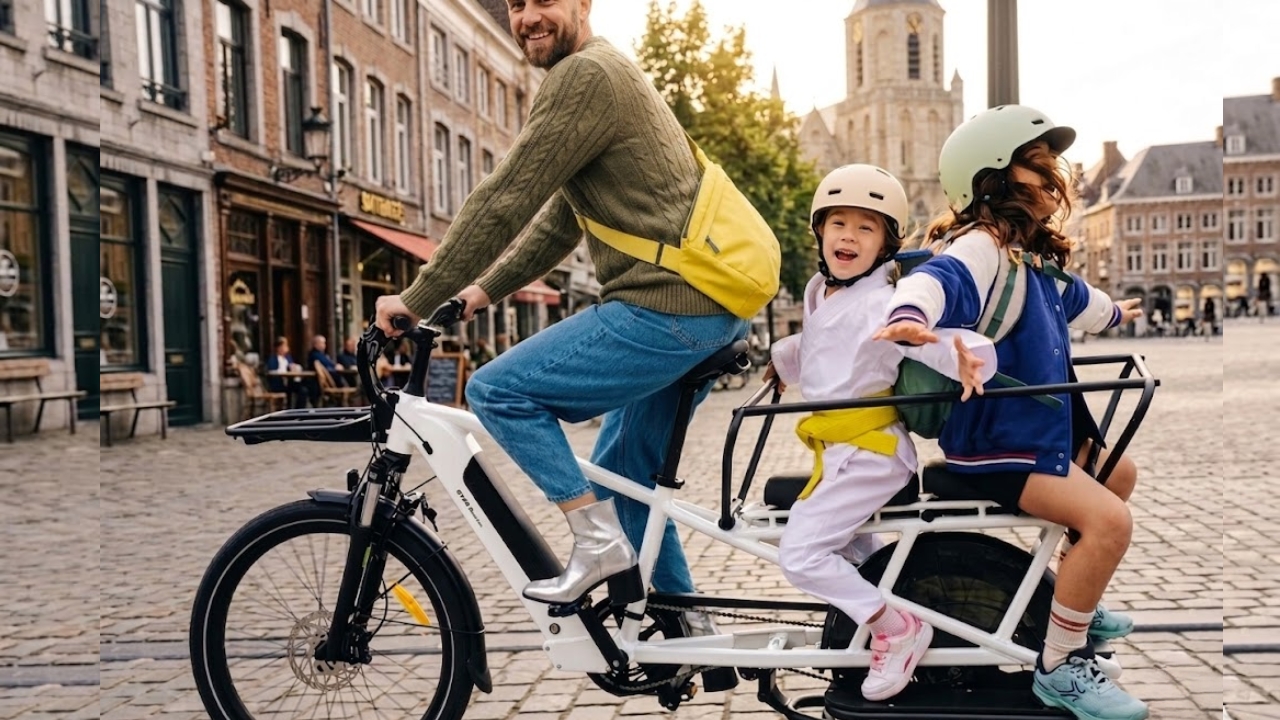
Electric cargo bikes are no longer niche products designed only for cycling enthusiasts. Across cities and suburban neighborhoods, they are quickly becoming realistic alternatives to second cars, school-run vehicles, and even delivery vans. As more families search for affordable and sustainable transportation, brands are competing to offer better range, more carrying capacity, and smarter technology at prices ordinary riders can justify.
That is exactly where the Decathlon Longtail Cargo Bike enters the conversation. With a larger battery, a more competitive price, and practical features designed for everyday use, this electric cargo bike positions itself as one of the most balanced options in the growing utility e-bike segment. Instead of chasing luxury branding or oversized performance claims, Decathlon focuses on accessibility, functionality, and real-world usability.
The result is a cargo bike that feels less like a premium gadget and more like a practical mobility solution for modern families and urban riders.
Why Longtail Cargo Bikes Are Becoming So Popular
The rise of longtail cargo bikes reflects changing transportation habits around the world. Urban congestion, rising fuel prices, parking limitations, and environmental concerns are pushing people to reconsider how they move through cities. Traditional bicycles are useful, but they often struggle when carrying children, groceries, work equipment, or larger loads.
Longtail cargo bikes solve that problem by extending the rear frame, allowing riders to transport passengers or cargo without dramatically increasing the bike’s overall footprint. Unlike bulky front-loader cargo bikes, longtail models remain relatively agile and easier to store, making them more practical for daily commuting.
For parents, they provide a simpler way to handle school pickups and shopping trips. For businesses, they offer low-cost delivery capabilities. For commuters, they reduce dependence on cars while still maintaining flexibility and carrying power.
Decathlon understands this growing demand and has designed its Longtail Cargo Bike to appeal to a wide audience rather than a narrow enthusiast market.
Bigger Battery Means Greater Freedom
One of the standout improvements in the Decathlon Longtail Cargo Bike is its upgraded battery capacity. Range anxiety remains one of the biggest concerns among electric bike buyers, especially for people using cargo bikes for family transportation or work-related travel.
A larger battery changes the experience significantly. Riders can comfortably handle longer daily routes without constantly monitoring charge levels. Multiple school runs, shopping trips, or work commutes become manageable on a single charge, which increases confidence and convenience.
The bigger battery also matters because cargo bikes naturally consume more power than standard e-bikes. Carrying passengers or heavy loads places additional strain on the motor system, especially when climbing hills or riding against strong winds. By increasing battery capacity, Decathlon improves consistency and reduces the likelihood of range limitations during demanding rides.
For users who rely on their bike daily, this improvement is not just technical—it directly impacts lifestyle flexibility.
Lower Pricing Creates a More Accessible Option
One of the biggest barriers to cargo bike adoption has always been cost. Many premium electric cargo bikes are priced similarly to used cars, placing them outside the reach of average households. Even riders interested in sustainable mobility often hesitate when faced with extremely high prices.
Decathlon takes a different approach. The company has built its reputation around delivering practical sports and mobility products at accessible prices, and the Longtail Cargo Bike continues that strategy.
By offering a lower price while still including strong battery performance and practical utility features, Decathlon targets riders who want value rather than luxury branding. This matters because the future growth of cargo bikes depends on affordability. A practical cargo bike should save money over time, not become a financial burden at the moment of purchase.
The lower pricing also creates opportunities for families who are considering replacing a second vehicle. When maintenance, fuel, insurance, and parking costs are factored into the equation, an affordable cargo bike becomes a compelling long-term investment.
Designed for Everyday Utility
The best cargo bikes are not necessarily the most powerful or futuristic. The best models are the ones that fit seamlessly into ordinary routines. Decathlon appears to understand this clearly with its longtail design philosophy.
The extended rear section provides space for child seating, cargo bags, baskets, or passenger accessories. Riders can carry groceries, sports gear, backpacks, or work equipment without sacrificing balance or comfort. This flexibility transforms the bike from a recreational product into a genuine transportation tool.
The riding position also plays an important role. Cargo bikes can become intimidating if they feel too large or unstable, especially for less experienced cyclists. Decathlon’s design focuses on maintaining approachable handling while still offering increased carrying capability.
Practical touches such as integrated lighting, sturdy kickstands, and compatibility with cargo accessories help improve everyday usability. These details may not seem dramatic in marketing materials, but they become extremely important during daily use.
Smarter Features Improve the Riding Experience
Modern electric bikes are increasingly expected to offer smart functionality, and the Decathlon Longtail Cargo Bike reflects that trend. Riders today want more than just pedal assistance. They expect intuitive controls, battery management systems, and smoother integration between hardware and daily riding habits.
Smart motor assistance helps balance power delivery depending on terrain and rider input. Instead of feeling abrupt or artificial, the assistance system can create a smoother and more natural cycling experience. This becomes particularly important on cargo bikes where stability and control matter more than aggressive acceleration.
Battery monitoring and riding data also contribute to a better ownership experience. Riders benefit from knowing their remaining range, assistance levels, and power usage patterns. These features make trip planning easier and help users feel more confident during longer rides.
Technology alone does not define a good cargo bike, but thoughtful integration of smart systems can make the overall experience significantly more enjoyable and practical.
Comfort and Stability Matter More Than Speed
Cargo bikes are not built for racing. Their primary purpose is transportation with stability, comfort, and safety. Decathlon’s approach appears focused on delivering predictable handling rather than excessive speed or performance figures.
A strong frame structure is essential because cargo bikes carry more weight than traditional bicycles. The frame must remain stable while transporting passengers or heavy cargo loads. Good weight distribution improves rider confidence and reduces wobbling during turns or low-speed riding.
Comfort also matters during longer journeys. Ergonomic riding positions, supportive saddles, and stable steering geometry help reduce fatigue. Riders using cargo bikes for everyday transportation need something that feels manageable even after repeated use throughout the week.
The larger battery further supports comfort by reducing stress related to charging frequency. Riders can focus on the journey rather than constantly planning around battery limitations.
A Serious Alternative to Urban Car Use
One of the most important aspects of the Decathlon Longtail Cargo Bike is what it represents beyond cycling itself. This type of product reflects a broader shift in urban mobility thinking.
For many city residents, cars are becoming less practical due to congestion, fuel expenses, and limited parking. At the same time, public transportation may not always provide flexibility for family schedules or cargo needs. Cargo bikes fill an increasingly important middle ground.
A longtail e-bike can handle school drop-offs, grocery shopping, short commutes, and recreational outings with far lower operating costs than a car. It also reduces emissions and encourages more active transportation habits.
Decathlon’s pricing strategy strengthens this appeal because it lowers the financial barrier to entry. More consumers can realistically consider replacing certain car trips with electric bike transportation when the upfront investment becomes manageable.
The Future of Affordable Cargo Mobility
The electric cargo bike market is evolving rapidly, but affordability and practicality will likely determine which products succeed long term. Premium models may attract attention, but widespread adoption depends on creating bikes that ordinary riders can actually purchase and use daily.
The Decathlon Longtail Cargo Bike represents a strong step in that direction. By combining a larger battery, lower pricing, practical utility, and smart functionality, it delivers a balanced package aimed at real-world transportation rather than luxury marketing.
As cities continue adapting to new mobility trends, products like this may become increasingly common on streets, bike lanes, and neighborhood routes. Families, commuters, and businesses are all searching for transportation solutions that are efficient, affordable, and environmentally responsible.
Decathlon’s latest longtail cargo bike does not try to reinvent urban mobility with flashy promises. Instead, it improves the essentials that matter most: range, usability, accessibility, and everyday practicality. That combination could make it one of the smartest cargo bike choices for riders looking to embrace a more flexible and sustainable way of moving through modern life.
