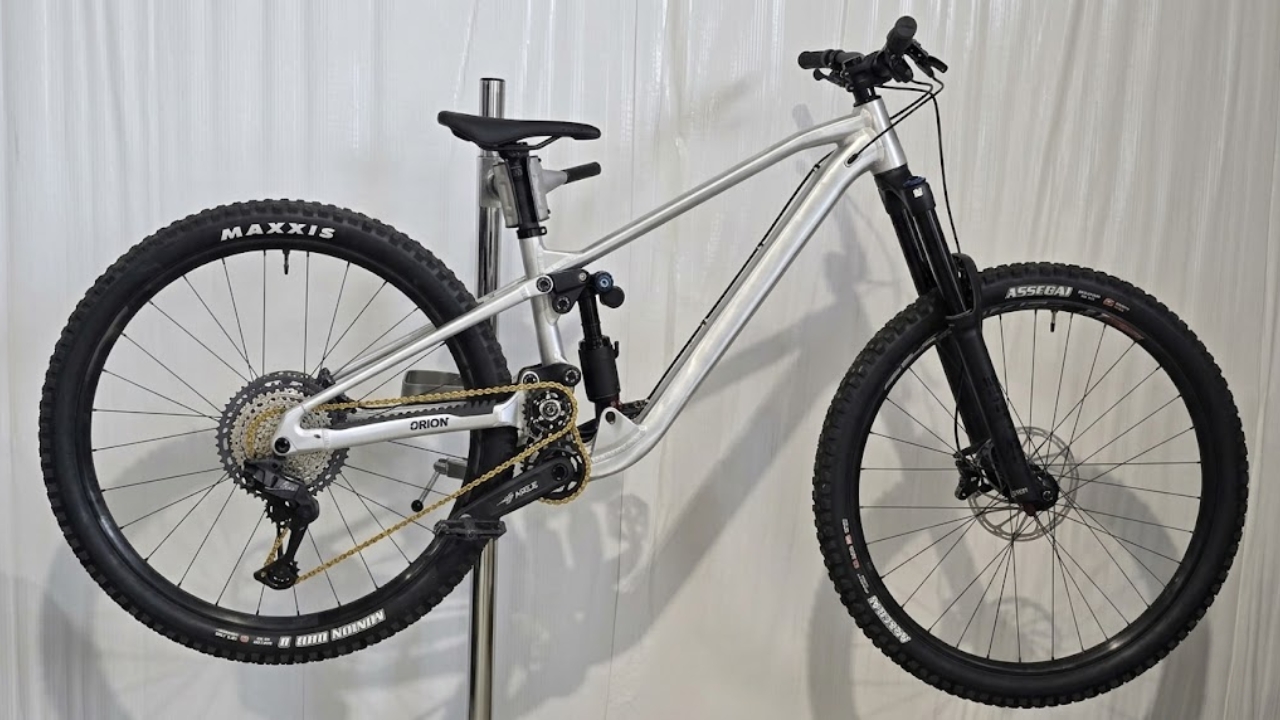
The mountain biking world thrives on innovation, but every so often, a concept emerges that genuinely challenges long-standing conventions. RMU’s latest teaser of an enduro bike featuring a dual-chain drive system has sparked exactly that kind of curiosity. While the brand has kept many details under wraps, the mere introduction of this unconventional drivetrain layout signals a potentially significant shift in how riders think about efficiency, suspension performance, and power delivery on aggressive terrain.
Enduro bikes are built to handle the extremes—steep descents, technical climbs, and everything in between. Traditionally, engineers have focused on refining suspension kinematics, improving geometry, and optimizing drivetrain reliability. RMU’s approach appears to go a step further by reimagining one of the most fundamental aspects of a bicycle: how power is transferred from the rider to the rear wheel.
Understanding the Dual-Chain Drive Concept
At the heart of RMU’s teased bike is a dual-chain system, a concept that deviates sharply from the single-chain setups found on nearly all modern bicycles. While details are limited, the idea likely involves splitting drivetrain duties between two separate chains, each serving a distinct purpose within the bike’s mechanical ecosystem.
One plausible configuration is that one chain handles pedaling input while another isolates suspension movement from drivetrain forces. This separation could reduce pedal kickback—a common issue in full-suspension bikes where chain growth interferes with smooth pedaling over rough terrain. By decoupling these forces, RMU may be aiming to create a ride feel that is both more efficient and more controlled.
Another potential benefit lies in maintaining consistent chain tension and alignment regardless of suspension travel. Riders often experience performance trade-offs when suspension compresses under load, but a dual-chain system could minimize these compromises, offering a smoother and more predictable ride.
Addressing Long-Standing Enduro Challenges
Enduro bikes are designed to perform well across varied terrain, but achieving the perfect balance between climbing efficiency and descending capability has always been a challenge. Traditional drivetrain systems must contend with complex interactions between suspension movement and chain dynamics.
RMU’s concept could address several of these issues simultaneously. For example, by isolating drivetrain forces, the bike may reduce energy loss during pedaling, particularly on technical climbs where traction and efficiency are critical. Riders could experience improved power transfer without sacrificing the plush suspension feel needed for descents.
Additionally, drivetrain wear and maintenance might see improvements. With forces distributed across two chains, individual components may endure less stress, potentially increasing longevity. However, this also introduces new questions about complexity, weight, and serviceability—factors that could influence how widely the design is adopted.
Engineering Complexity and Practical Considerations
While the dual-chain concept is intriguing, it inevitably raises questions about practicality. Adding a second chain introduces additional components, including extra chainrings, tensioners, and possibly specialized guides or idlers. This complexity could lead to increased weight, which is a critical consideration for enduro riders who often need to pedal long distances.
Maintenance is another factor. Riders are accustomed to servicing a single drivetrain system, and doubling that could mean more time spent on upkeep. Dirt, mud, and debris—common elements in enduro environments—could affect both chains differently, requiring thoughtful design to ensure reliability.
There is also the matter of compatibility. Modern bikes rely on standardized components for ease of replacement and customization. A dual-chain system may require proprietary parts, which could limit accessibility for riders who prefer readily available upgrades and replacements.
Potential Impact on Suspension Performance
One of the most exciting aspects of RMU’s design is its potential influence on suspension performance. Full-suspension bikes often face compromises due to the interaction between the drivetrain and suspension linkage. Anti-squat characteristics, pedal kickback, and chain growth all play roles in how a bike feels on the trail.
By separating drivetrain forces, RMU could allow suspension engineers greater freedom to tune kinematics without being constrained by chain-related factors. This could result in a bike that remains highly active over rough terrain while still providing efficient pedaling characteristics.
Such improvements would be particularly valuable in enduro racing, where riders must maintain speed and control across diverse trail conditions. A more independent suspension system could enhance traction, reduce rider fatigue, and improve overall confidence on technical sections.
Industry Reactions and Rider Curiosity
The teaser has already generated significant discussion among enthusiasts and industry observers. Some view the dual-chain concept as a bold step forward, reminiscent of past innovations that initially seemed unconventional but later became standard. Others remain cautious, pointing out that many ambitious drivetrain ideas have struggled to gain traction due to complexity or marginal gains.
Riders, meanwhile, are naturally curious. The promise of improved efficiency and suspension performance is appealing, especially for those who push their equipment to the limits. However, practical concerns such as weight, cost, and maintenance will likely influence how the bike is received once more details are revealed.
It’s worth noting that innovation often involves a period of skepticism. Concepts that challenge established norms must prove their value through real-world performance, not just theoretical advantages.
Comparing to Past Innovations
The cycling industry has seen its share of unconventional drivetrain concepts over the years. From gearbox systems to belt drives, engineers have explored numerous ways to improve efficiency and durability. Some ideas have found niche applications, while others have faded into obscurity.
RMU’s dual-chain approach shares similarities with these past efforts in its goal of optimizing performance by rethinking fundamental mechanics. However, its focus on enduro riding—a discipline that demands both efficiency and resilience—could give it a unique position in the market.
If successful, the design could inspire further experimentation, encouraging other manufacturers to explore alternative drivetrain configurations. Even if it remains a niche solution, it could still contribute valuable insights into how bikes can be engineered for better performance.
What This Means for the Future of Enduro Bikes
The introduction of a dual-chain drive system highlights the ongoing evolution of enduro bike design. As riders demand more capable machines, manufacturers are pushed to explore new ideas that go beyond incremental improvements.
RMU’s concept suggests that there is still room for innovation in areas that many consider mature. By challenging the traditional single-chain paradigm, the company is opening the door to new possibilities in drivetrain and suspension integration.
Whether this specific design becomes mainstream or not, it underscores the importance of experimentation in advancing the sport. Even concepts that don’t achieve widespread adoption can influence future developments, shaping the direction of bike design in subtle but meaningful ways.
Awaiting the Full Reveal
For now, much of the excitement surrounding RMU’s enduro bike remains speculative. The teaser has provided just enough information to spark interest without revealing the full scope of the design. Key details such as weight, geometry, pricing, and real-world performance are still unknown.
As more information emerges, riders and industry experts will be eager to see how the dual-chain system performs under demanding conditions. Testing and rider feedback will ultimately determine whether the concept delivers on its promises.
Until then, the bike stands as a reminder that innovation often begins with bold ideas that challenge the status quo. RMU’s willingness to explore uncharted territory is a testament to the creativity and ambition that continue to drive the evolution of mountain biking.
