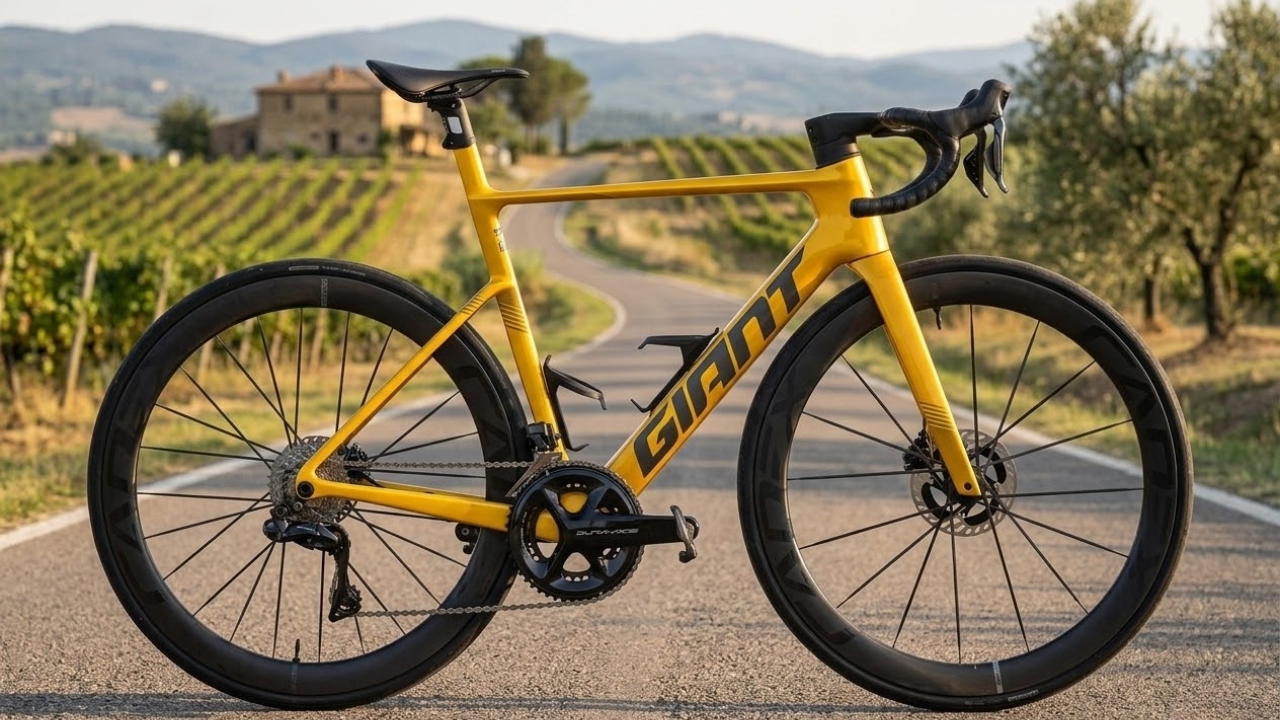
The 2026 edition of the Propel Advanced SL arrives as one of the most advanced aerodynamic road bikes ever produced by Giant. Long known for its race-winning pedigree, the Propel platform has evolved dramatically in recent years, blending wind-tunnel aerodynamics with surprisingly balanced ride comfort.
Traditionally, the lightweight all-round role in Giant’s lineup belonged to the legendary Giant TCR. However, with modern aerodynamics becoming more efficient and frames getting lighter, the newest Propel Advanced SL begins to blur the line between aero specialist and pure climber.
That raises an interesting question for racers and enthusiasts alike: could the Propel eventually replace the TCR as Giant’s ultimate all-around race machine?
Key Highlights
The Propel Advanced SL introduces several significant design and performance upgrades that elevate it far beyond earlier aero bikes.
Key highlights include:
- Ultra-light Advanced SL grade composite frame construction
- Refined aerodynamic tube shaping based on computational airflow modeling
- Fully integrated cockpit with internal cable routing
- Disc brake platform optimized for race performance
- Improved stiffness-to-weight ratio compared to the previous generation
- Aero carbon seatpost designed for compliance and comfort
- Wind-tunnel optimized wheel compatibility
- Race-ready geometry derived from elite competition feedback
The result is a machine designed not only to be fast on flat roads but competitive across an entire race course.
Frame and Aerodynamic Design
The heart of the Propel Advanced SL is its meticulously engineered carbon frame. Using Giant’s top-tier composite technology, the frame balances stiffness, weight reduction, and aerodynamic efficiency.
Design highlights include:
- Truncated aerofoil tube shapes that reduce drag without excessive weight
- Integrated seat mast design for improved power transfer
- Slimmed head tube and fork interface for airflow management
- Deep section down tube optimized for crosswind stability
- Hidden cable routing through the cockpit and head tube
Compared to older aero bikes that often felt heavy and harsh, the Propel manages to maintain a surprisingly responsive feel. It is still an aerodynamic machine at heart, but its design has evolved to feel much more versatile.
Geometry and Ride Character
While the Propel is still categorized as an aero race bike, its geometry sits closer than ever to that of the Giant TCR.
Geometry characteristics include:
- Aggressive race-focused reach and stack numbers
- Short rear triangle for rapid acceleration
- Balanced weight distribution for high-speed stability
- Optimized fork rake for precise steering response
On the road, the bike feels quick and planted. Sprint efforts highlight the frame’s stiffness, while fast descents reveal a level of stability that many lightweight climber bikes struggle to match.
Riders accustomed to traditional aero frames will likely notice the improved responsiveness and reduced road harshness.
Weight and Climbing Performance
A major shift in modern bike design is the shrinking weight difference between aero bikes and climbing bikes.
The Propel Advanced SL frame weighs roughly:
- Around 850–900 grams depending on size
- Comparable to many high-end race frames
With a full race build, complete bikes can dip close to the UCI minimum weight limit, meaning the Propel now climbs far better than previous generations.
Climbing advantages include:
- Efficient power transfer during seated efforts
- Lightweight carbon construction reducing overall mass
- Balanced frame stiffness that prevents energy loss
While the TCR still holds the reputation as the pure climber in Giant’s lineup, the performance gap has narrowed significantly.
Cockpit Integration
Modern race bikes rely heavily on integration to maximize aerodynamic performance, and the Propel Advanced SL fully embraces this philosophy.
Cockpit highlights include:
- Fully integrated carbon handlebar and stem system
- Internal cable routing for brake lines and electronic shifting
- Optimized hand positions for sprinting and aero riding
- Narrow frontal profile to reduce wind resistance
This setup contributes significantly to the bike’s aerodynamic efficiency while maintaining a clean and professional race appearance.
Groupset and Build Options
The Propel Advanced SL is typically offered with top-tier race components.
Common build options include:
- Electronic shifting systems from Shimano
- High-end drivetrains from SRAM
- Carbon wheelsets designed for aerodynamic efficiency
- Hydraulic disc braking systems for consistent stopping power
These premium builds ensure that the bike is ready for elite racing right out of the box.
Ride Comfort and Practicality
Aero bikes once had a reputation for punishing ride quality, but the Propel Advanced SL manages to soften that image.
Comfort features include:
- Redesigned aero seatpost that flexes slightly under load
- Wider tire compatibility for improved road vibration absorption
- Carbon layup engineered to dampen harsh impacts
The bike can comfortably run modern wider tires, allowing riders to balance rolling resistance, grip, and comfort depending on terrain.
This improvement helps the Propel perform better on long endurance rides and rougher road surfaces.
Who the Propel Advanced SL Is For
The Propel Advanced SL targets serious cyclists and racers who want maximum speed across varied terrain.
Ideal riders include:
- Competitive road racers
- Fast group ride enthusiasts
- Riders focused on sprint performance
- Cyclists seeking an aero bike that can still climb efficiently
It is less focused on casual riders and more designed for those who want uncompromising performance.
Pricing and Availability
As Giant’s flagship aero platform, the Propel Advanced SL sits at the top of the brand’s road bike lineup.
Typical pricing ranges include:
- Advanced SL frameset: approximately $4,500–$5,000
- Complete builds: roughly $9,000–$13,000 depending on components
Pricing varies by region and specification, but it remains competitive compared to other flagship aero bikes.
Final Verdict
The latest Propel Advanced SL represents a major evolution in aerodynamic road bike design. With dramatically reduced weight, improved compliance, and race-level stiffness, it is no longer just a flat-road specialist.
While the Giant TCR still holds its place as a legendary climber, the performance gap between the two bikes is now smaller than ever.
For many riders, the Propel Advanced SL may effectively serve as both an aero weapon and an all-round race machine.
Whether it officially replaces the TCR in the future remains uncertain, but one thing is clear: the Propel has never been closer to claiming that role.
