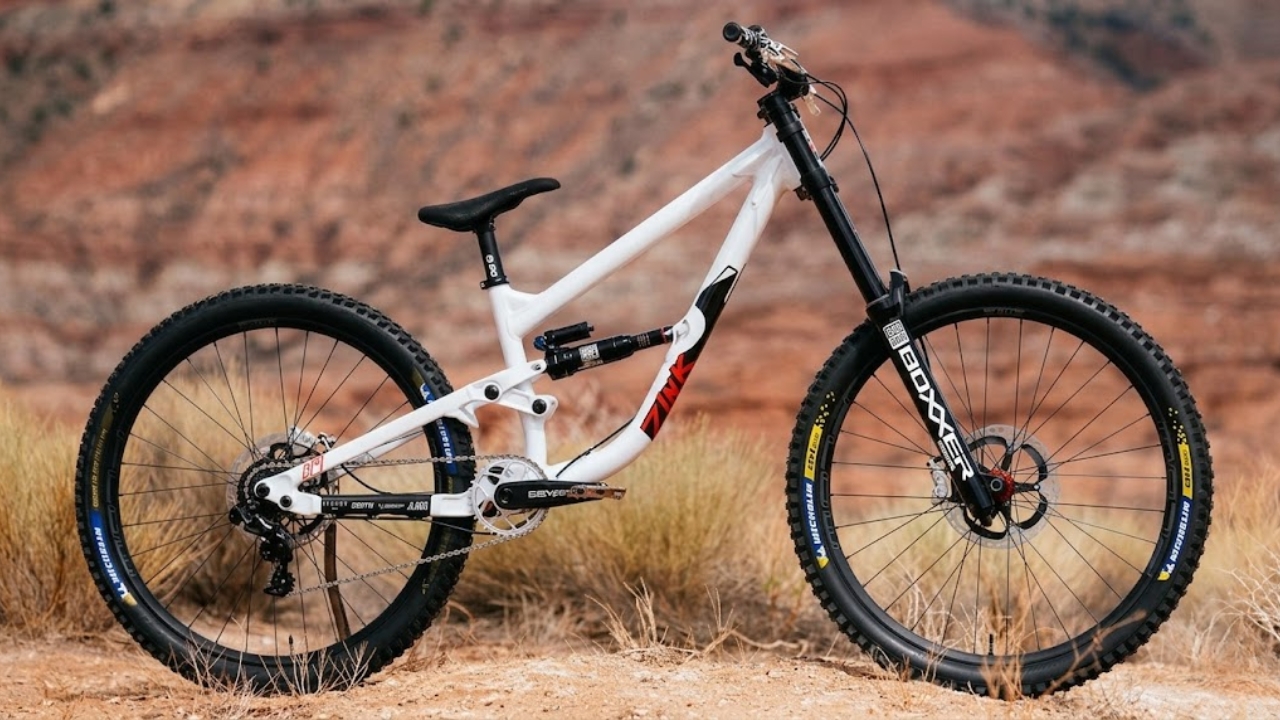
The latest release from Zink Bikes is not trying to follow modern downhill trends. Instead, the new Zader takes a more playful and freeride-focused direction, combining bike park capability, downhill stability, and jump-oriented handling into one aggressive platform. Designed by freeride icon Cam Zink, the Zader represents a return to a style of riding that prioritizes creativity and confidence over pure race efficiency.
At first glance, the Zader looks purpose-built for steep terrain, massive jumps, and rough bike park laps. The frame features 190mm of rear travel paired with a 200mm fork setup, putting it firmly in gravity-bike territory. Yet despite the long-travel numbers, the bike avoids the stretched-out geometry that dominates World Cup downhill machines. Instead, the Zader focuses on agility, pop, and rider control.
That philosophy immediately separates it from many modern downhill bikes currently on the market. The Zader is not chasing stopwatch times alone. It is designed for riders who want to slash corners, boost side hits, and stay active on the trail rather than simply plowing through terrain.
A Freeride-Inspired Geometry Package
One of the most interesting parts of the Zader is its geometry. While many gravity bikes continue to grow longer and lower every year, the Zader intentionally keeps things compact and maneuverable. The bike uses relatively short chainstays, moderate reach numbers, and dual 27.5-inch wheels on medium and large sizes. Smaller frames use a mini-mullet setup with a 27.5-inch front wheel and 26-inch rear wheel.
That wheel choice alone says a lot about the bike’s intentions. In a market dominated by 29-inch downhill bikes, the Zader leans toward responsiveness and maneuverability instead of maximum rollover speed. Riders who love jibbing trails, throwing whips, and finding creative lines will likely appreciate that approach.
The frame also includes a flip-chip geometry adjustment that changes the head angle and bottom bracket height. Riders can choose a lower and slacker setup for steep park riding or a slightly steeper position for more all-around versatility. The head angle ranges from approximately 63.5 to 64.3 degrees depending on the setting.
The geometry numbers may appear conservative compared to current downhill race bikes, but that is intentional. Everything about the Zader points toward playful riding characteristics rather than ultra-stable race-only behavior.
Lift Suspension Technology and Ride Feel
The Zader uses what Zink Bikes calls Lift Technology suspension. The platform is based around a Horst-link layout that aims to combine traction with an energetic and responsive feel. According to the brand, the system is specifically tuned to help riders generate lift more easily when manualing, bunny hopping, or boosting jumps.
That suspension character appears to be one of the defining features of the bike. Rather than feeling glued to the ground at all times, the Zader is intended to encourage active riding. Riders can preload transitions, pop off lips, and move the bike around more easily than they might on a longer and heavier downhill race platform.
The rear suspension uses a 250x75mm shock, delivering true downhill-level travel and support. Combined with the bike’s shorter rear center and smaller wheels, the overall ride feel should land somewhere between a freeride bike and a modern park bike.
For riders coming from large 29er downhill bikes, the Zader will likely feel noticeably more compact and lively. That may not suit every rider, especially those prioritizing pure race speed on rough tracks, but it could be exactly what park riders and freeride enthusiasts have been waiting for.
Built in California With a Strong Focus on Durability
Another major talking point surrounding the Zader is its construction. The aluminum frame is manufactured in Southern California and comes with a lifetime warranty. At a time when many bike brands outsource production overseas, the domestic manufacturing approach gives the Zader a unique identity in the gravity segment.
The frame itself weighs around 8 pounds without a shock, which is competitive considering the amount of travel and intended use. Welds, tubing shapes, and frame details all reflect a focus on durability and simplicity rather than flashy styling.
There are also several practical touches built into the design. The bike uses a Universal Derailleur Hanger for easier replacement and compatibility, and there is room for a Fidlock bottle system inside the front triangle. The frame also supports full insertion of long dropper posts, making the Zader more versatile than a dedicated downhill-only machine.
That versatility is important because the bike seems positioned somewhere between downhill, freeride, and aggressive enduro categories. Riders could easily build it as a bike park weapon, a freeride jump bike, or even a gravity-focused trail machine depending on component choices.
Component Options and Pricing
The Zader is available as a frame-only option or as a complete custom build. The frame starts around $2,850 USD, while complete builds can climb well beyond $8,000 depending on components and suspension choices.
The flagship setup mirrors Cam Zink’s personal build, featuring premium suspension and gravity-ready components throughout. Build kits include options like RockShox Boxxer forks, Vivid rear shocks, Michelin downhill tires, Onyx hubs, and high-end cockpit parts.
The customization approach is another appealing aspect of the Zader platform. Riders can tailor the bike toward park riding, freeride sessions, or downhill racing without being locked into one specific category.
Unlike many complete downhill bikes that arrive with highly race-focused setups, the Zader seems intentionally open-ended. That flexibility makes sense considering the type of rider it is targeting.
Who the Zader Is Really For
The Zader is clearly not trying to be the fastest downhill race bike in the world. Instead, it targets riders who value style, creativity, and fun on the trail. Riders who spend weekends at bike parks, love jump lines, and enjoy technical freeride terrain will probably connect with the bike immediately.
It also feels like a refreshing counterpoint to the increasingly serious direction of mountain bike design. Modern geometry trends have created incredibly capable machines, but some riders miss the lively and playful feeling that older freeride bikes offered. The Zader attempts to bring that personality back while still incorporating modern suspension and frame technology.
For experienced gravity riders, the bike could offer a more engaging and expressive ride experience than many long-wheelbase race bikes. For younger riders entering freeride culture, it may become an appealing platform that encourages progression and confidence.
The smaller wheels, short rear end, and responsive suspension all suggest a bike that rewards rider input instead of simply flattening the terrain beneath it.
Early Impressions Point Toward a Unique Gravity Bike
First impressions of the Zader suggest that it occupies a unique space in today’s gravity market. It combines downhill capability with freeride personality in a way that feels increasingly rare. Rather than chasing trends, the bike leans heavily into Cam Zink’s personal riding style and philosophy.
That authenticity may ultimately become the Zader’s biggest strength. It feels purpose-built by riders who genuinely love bike park laps, jumps, steep terrain, and creative riding.
The Zader may not appeal to every downhill racer or enduro rider, but it does not need to. Its mission is clear from the beginning: deliver a durable, playful, confidence-inspiring gravity bike that makes riders want to have fun.
In an era where many mountain bikes are becoming increasingly specialized and numbers-driven, the Zader stands out by focusing on feel, energy, and rider expression. For gravity riders searching for something more playful and personal, this could easily become one of the most interesting bike launches of the year.
